

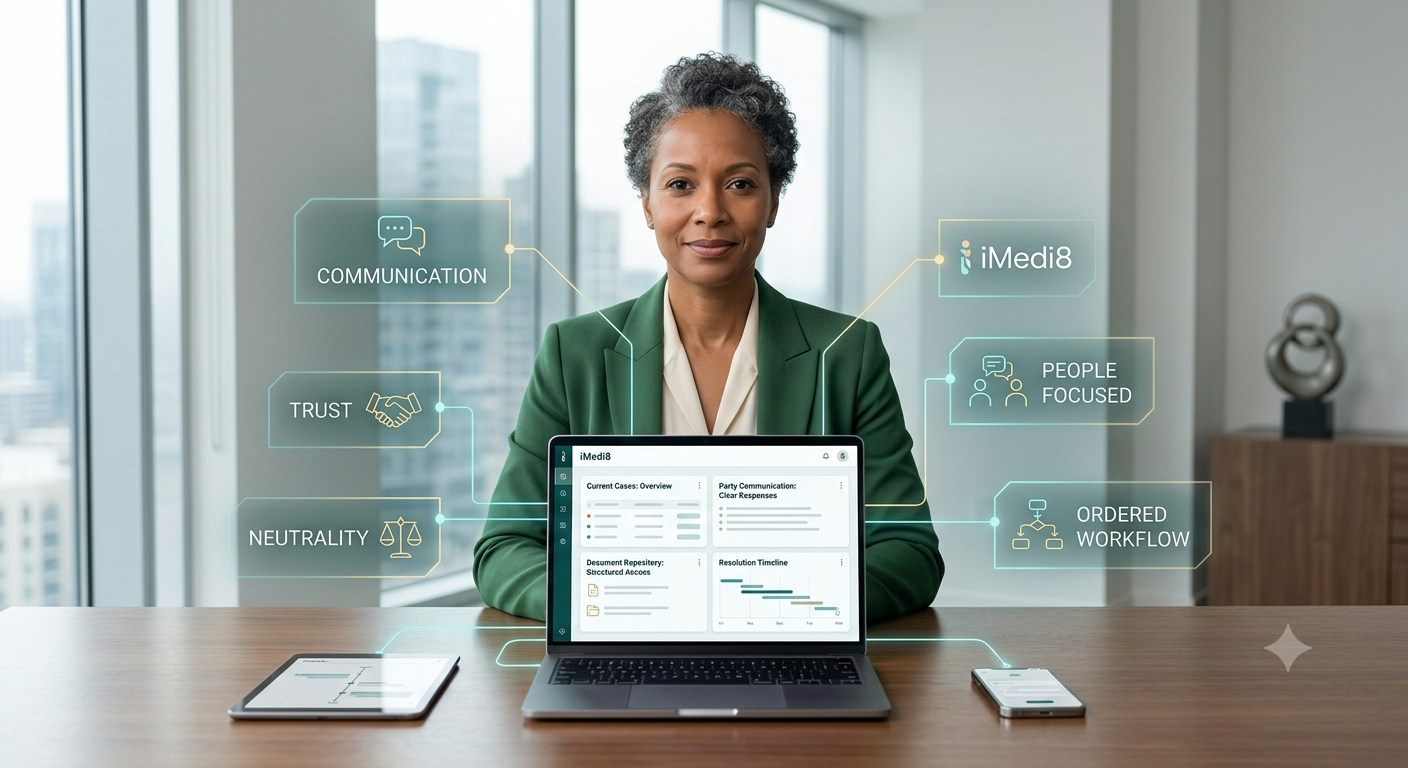
Mediation is a human process.
It depends on communication, trust, neutrality and the ability of a mediator to guide people toward resolution.
But behind every mediation is a growing amount of information that needs to be managed.
Documents. Correspondence. Case notes. Agreements. Financial information. Timelines. Party responses.
For many mediators, managing this information has become a challenge of its own.
The problem is that most tools were never designed specifically for mediation.
The limitations of general-purpose tools
Many mediators have created their own systems using everyday tools.
A folder system for documents.
A spreadsheet for tracking information.
Email for formal communication.
Messaging apps for quick updates.
Calendar reminders for important dates.
Each tool does its job, but none of them understand the mediation process.
The result is a workflow held together by the mediator’s own effort — remembering where things are, which version is current, and what still needs attention.
This works when the number of cases is small.
But as a practice grows, the administrative burden grows with it.
Mediation is not just case management
Traditional case management software is often designed around files, tasks and records.
Mediation is different.
A mediator is not simply managing a case file. They are managing a process involving people, communication and sensitive information.
The software supporting that process should reflect that difference.
Purpose-built mediation software understands that the goal is not just to store information.
The goal is to make the journey from conflict to resolution easier to manage.
The hidden cost of administration
Administrative work is often accepted as just part of being a mediator.
But every hour spent searching for documents, updating spreadsheets or following up on information is time taken away from the work only a mediator can do.
For independent practitioners especially, time is one of their most valuable resources.
Reducing unnecessary administration is not about doing less work.
It is about spending time on the work that matters.
What purpose-built mediation software should provide
Software designed for mediators should help with the realities of mediation:
- Keeping case information organised
- Managing documents and updates
- Tracking important actions and communication
- Creating a clearer experience for parties
- Reducing reliance on disconnected tools
The technology should fit the process — not force the process to fit the technology.
A better way forward
Mediators do not need more complexity.
They do not need another system filled with features they will never use.
They need tools designed around the way mediation actually happens.
That is the reason iMedi8 exists.
To provide mediation software that understands the work, reduces administration and allows mediators to focus on what matters most: helping people resolve disputes.
Technology should support mediation.
It should not become another thing to manage.



Why We Built iMedi8
For something as human as mediation, the amount of time spent dealing with administration is surprisingly…

What is iMedi8?
Mediation is a structured process, but managing that process can become complicated. Every case involves information…

Why Mediators Need Purpose-Built Software
Mediation is a human process. It depends on communication, trust, neutrality and the ability of a…

The Future of Mediation Technology
At its core, mediation depends on listening, understanding, communication and trust. No software or AI can…

How iMedi8 Helps Independent Mediators Work Smarter
Independent mediators face a unique challenge. They are responsible for everything. They manage the clients. They…